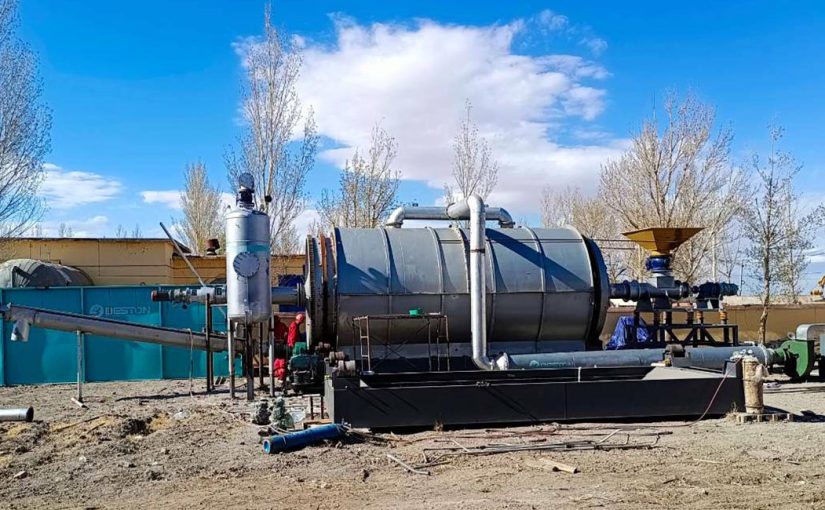
Municipal and industrial sectors generate billions of tons of refractory refuse annually, necessitating a paradigm shift from traditional landfilling to advanced thermochemical conversion. Pyrolysis represents a highly efficient, endothermic decomposition methodology that processes carbonaceous materials in the strict absence of oxygen. Unlike conventional incineration, which yields hazardous fly ash and greenhouse gases, this closed-loop thermal treatment deconstructs complex polymer chains into high-value energetic commodities. By utilizing specialized pyrolysis machinery, waste management facilities can effectively intercept various solid waste streams, transforming environmental liabilities into sustainable, localized revenue sources.
Optimizing Synthetic Polymers with Plastic to Fuel Machine Technology
Macroplastic accumulation presents a severe ecological bottleneck due to the recalcitrant nature of synthetic polymers like polyethene and polypropylene. Integrating a specialized plastic to fuel machine into solid waste infrastructure allows for the precise depolymerisation of these long-chain hydrocarbons. The process initiates within a sealed reactor where optimal thermal cracking temperatures fracture the polymer backbones into volatile organic compounds. These vaporized fractions undergo rapid condensation, segregating into non-condensable syngas and high-density liquid hydrocarbons. This pyrolytic oil serves as a direct substitute for industrial heating oil or can undergo further distillation into transport-grade fuels. Consequently, this technology mitigates microplastic propagation while simultaneously advancing the circular economy.
Remediating Industrial Hazards through Thermal Desorption Plant Engineering
Sectors dealing with hazardous industrial waste, such as oil-drilling operations and chemical manufacturing, produce massive volumes of contaminated sludge and filter cakes. Standard mechanical separation often proves inadequate for these complex, hydrocarbon-laden matrices. Deploying a rugged thermal desorption plant addresses this challenge by utilizing indirect heat to volatilize heavy fractions without igniting the substrate material. This separation mechanism isolates volatile organic compounds, polycyclic aromatic hydrocarbons, and mercury from the inorganic mineral base. The liberated contaminants are safely vacuumed into secondary condensation units for recovery, leaving behind a sterile, non-hazardous solid residue suitable for construction backfill. This precise separation ensures regulatory compliance while minimizing environmental liability.
Upcycling Vulcanized Elastomers via Waste Tyre Pyrolysis Plant Systems
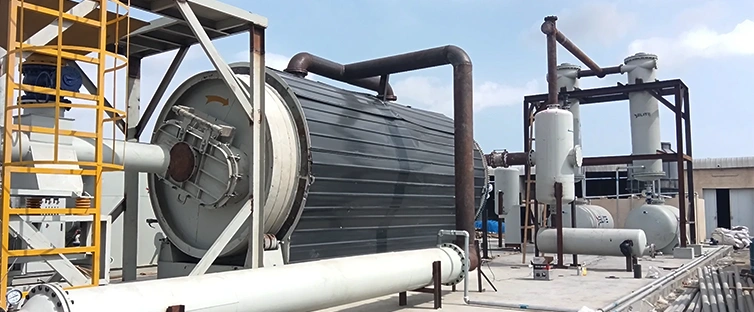
End-of-life tires represent an exceptionally problematic waste category due to their high durability, vulcanized cross-links, and immunity to biological degradation. Standard shredding and stockpiling create severe fire hazards and vector-borne disease risks. A dedicated waste tyre pyrolysis plant solves this dilemma by converting scrap tires into valuable commodities through controlled thermal degradation. The vulcanized rubber matrix decomposes to yield heavy pyrolytic oil, steel wire, non-condensable gas, and a high-carbon solid fraction known as recovered carbon black. This carbonaceous char can be micronized and reinjected into rubber manufacturing or utilized as an activated carbon precursor. By recovering these distinct material streams, facilities completely eliminate the elastomer waste footprint while capturing substantial economic value.

Achieving Systemic Efficiency and Environmental Equilibrium
The structural integration of diverse pyrolysis machinery reactors establishes a comprehensive blueprint for modern solid waste infrastructure. Modern facilities achieve high thermodynamic efficiency by redirecting the self-generated, non-condensable syngas back into the furnace burners to sustain the endothermic reaction. Advanced multi-stage scrubbing systems neutralize residual acid gases, particulate matter, and heavy metals before any emissions reach the atmosphere. As global landfill capacities diminish and resource scarcity intensifies, these closed-loop processing systems provide a scalable pathway toward complete waste minimization. The widespread deployment of these industrial systems ultimately decouples economic growth from environmental degradation.